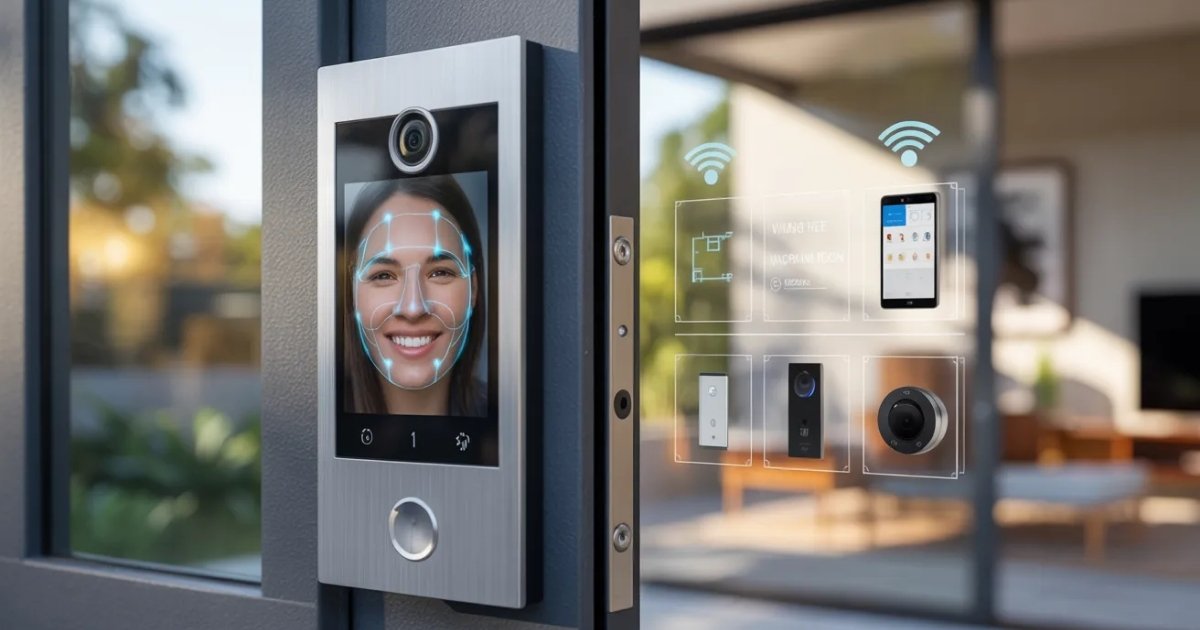
Home security isn’t what it used to be. Gone are the days when a simple peephole or basic buzzer system could adequately protect your property. Today’s homeowners face increasingly sophisticated threats from porch pirates to cyber vulnerabilities that demand equally advanced solutions.
Modern video intercom systems have evolved dramatically, transforming from simple communication devices into comprehensive security command centers. These smart intercoms now offer capabilities that would’ve seemed like science fiction just a decade ago. For American homeowners in 2026, understanding these innovations isn’t just about keeping up with technology it’s about making informed decisions that genuinely enhance residential security.
The difference between adequate protection and optimal safety often comes down to features. This guide explores seven cutting-edge video intercom capabilities that are fundamentally changing how we secure our homes. Whether you’re building new construction, upgrading existing systems, or simply curious about what’s possible, you’ll discover why traditional intercoms can’t compete with today’s intelligent alternatives.
Do Modern Intercoms Differ from Traditional Intercoms?
Absolutely and the gap widens every year. Traditional intercoms served one primary function: allowing you to communicate with someone at your door before granting access. These standalone intercoms typically featured basic audio, perhaps grainy video, and required you to be physically present at a monitor inside your home.
Modern intercoms represent a complete technological leap. They’re networked devices that integrate seamlessly into your broader smart home ecosystem. While wired intercoms of the past offered limited functionality with fixed capabilities, today’s cloud intercoms receive regular software updates that continuously add features and improve performance.
Here’s what separates them:
| Feature | Traditional Intercoms | Modern Intercoms |
| Video Quality | Standard definition (480p) | Ultra-HD video (2K-4K video) with HDR |
| Connectivity | Hardwired only | WiFi, cellular, cloud-enabled |
| Access | Must be home to use | Remote access from anywhere |
| Intelligence | None | AI-powered analytics, facial recognition |
| Integration | Standalone device | Full IoT ecosystem compatibility |
| Storage | Limited local recording | Cloud storage with unlimited options |
| Updates | Static never improves | Regular firmware enhancements |
| Access Control | Keys and codes only | Biometric access, digital keys, QR codes |
The transition from push button intercoms to AI intercoms mirrors the broader shift from analog to digital life. Basic intercoms waited passively for visitors. Advanced intercoms actively monitor, analyze, and protect even alerting you to suspicious behavior before someone rings the bell.
Consider this real difference: traditional systems require you to drop everything, walk to a monitor, and manually unlock a door. Modern video intercom systems let you answer from your smartphone while grocery shopping, verify it’s your trusted neighbor, and unlock remotely all within seconds. That convenience translates directly to enhanced home safety.
Latest Video Intercom System Features for Optimal Home Security
Today’s video intercoms pack extraordinary capabilities into sleek designs. These seven features represent the cutting edge of residential security technology available to American homeowners in 2026.
1. Ultra-High-Definition and Wide-Angle Video Capture
Image quality determines everything in building security. You can’t identify suspicious individuals, read license plates, or verify package deliveries with blurry footage. That’s why ultra-high-definition video capture has become non-negotiable.
Modern systems now offer 2K-4K video quality standard, with some premium models pushing even higher. This HD video quality delivers crystal-clear images that capture facial features, clothing details, and other identifying information that lower-resolution simple intercoms simply miss. Night vision technology using advanced infrared sensors means darkness doesn’t compromise security.
Wide-angle lens technology eliminates blind spots. While traditional cameras offered 90-110 degree views, today’s entrance coverage extends to 160-180 degrees some even provide 360-degree monitoring. You see approaching visitors before they reach your door, packages left at the periphery, and vehicles parking nearby.
Low-light processing algorithms enhance image clarity in challenging conditions. Whether it’s dawn, dusk, or stormy weather, these systems automatically adjust exposure and contrast to maintain clear identification. HDR (High Dynamic Range) prevents those washed-out images that plagued older systems when bright sunlight created harsh shadows.
Key benefits include:
- Accurate facial recognition for family members and frequent visitors
- License plate readability from approaching vehicles
- Package verification to confirm deliveries without opening doors
- Evidence quality footage for law enforcement if incidents occur
- Reduced false alarms through better visual context
2. AI-Powered Analytics
Artificial intelligence transforms passive recording devices into proactive security partners. AI-powered analytics represent perhaps the single most significant advancement in video intercom technology.
These systems don’t just record they understand. Sophisticated algorithms distinguish between people, animals, vehicles, and objects. That means no more alerts every time a squirrel crosses your porch or leaves blow past your door. Motion detection has evolved into behavior detection.
Facial recognition technology learns family members, regular visitors, and delivery personnel. When your teenager arrives home from school, you receive a friendly notification. When an unknown individual approaches at 2 AM, you get an urgent alert with captured images. This context-awareness changes everything about residential security.
Threat detection capabilities identify unusual patterns:
- Loitering behavior near entry points
- Multiple approach-and-retreat patterns suggesting surveillance
- Attempts to obscure camera views
- Package removals by unauthorized individuals
- Nighttime activity in typically quiet areas
Machine learning means these smart intercoms improve continuously. Each correct identification strengthens the algorithm. False positives decrease while accuracy increases some premium systems now achieve 99.7% accuracy in distinguishing known individuals from strangers.
Privacy-conscious homeowners appreciate that many systems process smart alerts on-device rather than sending video to cloud servers. You maintain control over your data while benefiting from sophisticated analysis.
3. Mobile and Cloud-Integration
Property security used to chain you to your home. Not anymore. Mobile and cloud-integration liberates modern intercoms from physical location constraints.
Answer your door from anywhere using smartphone apps. Whether you’re at work, on vacation, or simply upstairs unwilling to trek downstairs, two-way audio allows natural conversations with visitors. High-quality speakers and noise-canceling microphones make interactions feel face-to-face.
Cloud storage revolutionizes how we archive security footage. Traditional local recording filled hard drives quickly and risked data loss from hardware failure or theft. Cloud services offer:
- Continuous 24/7 recording without storage limits
- Automatic backup protecting against equipment damage
- Long-term retention for investigating patterns
- Easy search and retrieval of specific events
- Sharing capabilities with law enforcement when needed
Push notifications keep you informed in real-time. Customize alerts based on threat levels critical warnings for unknown individuals, gentle notifications for expected deliveries, silent recording for recognized family members.
Remote unlocking adds tremendous convenience and safety. Grant temporary access to service providers, let children in when they forget keys, or allow emergency responders to enter during crises all without physical presence. Multi-factor authentication ensures only authorized users can control access remotely.
Business travelers, frequent vacationers, and busy professionals particularly value this connectivity. Your home security doesn’t depend on being home.
4. Seamless Smart Home & IoT Ecosystem Integration
Video intercoms shine brightest when integrated into comprehensive smart home systems. These devices no longer operate in isolation they orchestrate coordinated responses across your entire IoT ecosystem.
Imagine this scenario: your intercom detects an approaching visitor. Before they reach the door, your porch lights activate. When facial recognition identifies your spouse arriving home, smart locks automatically disengage, the thermostat adjusts to preferred temperature, and your favorite music begins playing. This unified experience eliminates multiple app interactions while creating genuinely intelligent automation.
Compatible platforms include:
- Amazon Alexa for voice-controlled access and announcements
- Google Home for integrated routines and automation
- Apple HomeKit ensuring privacy-focused integration
- Samsung SmartThings for comprehensive device coordination
Security cameras coordinate with intercoms to provide comprehensive coverage. When someone rings your bell, cameras automatically focus on entry points while recording begins across all devices. Smart garage doors verify identity before opening. Alarm systems intelligently arm or disarm based on recognized individuals.
Voice assistants add hands-free convenience. “Alexa, show me the front door” displays your intercom feed on smart displays. “Hey Google, unlock the door for the dog walker” grants temporary access without interrupting what you’re doing.
This automation control transforms how homes respond to daily life. Parents monitoring children’s after-school arrivals, elderly residents reducing physical strain of answering doors, disabled homeowners gaining independence everyone benefits from wireless intercoms that communicate seamlessly with other devices.
5. Enhanced Cybersecurity & Data Privacy Features
Modern connectivity creates new vulnerabilities. As video intercom systems became internet-connected, they also became potential targets for hackers. Manufacturers have responded with robust enhanced cybersecurity measures.
Data encryption protects your privacy at every step. End-to-end encryption ensures video feeds can’t be intercepted in transit. Even if someone compromised your network, encrypted data remains unreadable without proper authentication. AES-256 encryption the same standard protecting banking transactions secures most premium systems.
Multi-factor authentication prevents unauthorized access to your system. Password alone isn’t enough. Biometric verification, temporary codes, or authenticator apps add essential security layers. Weak password vulnerabilities account for over 80% of home IoT breaches robust authentication eliminates this risk.
Privacy settings give users granular control:
- Choose between cloud storage and local-only recording
- Define privacy zones that won’t record (neighbor’s windows, public sidewalks)
- Set automatic deletion schedules
- Control third-party data sharing
- Review access logs showing who viewed footage when
Regular security updates patch vulnerabilities as they’re discovered. Automatic firmware updates mean you’re protected against emerging threats without technical expertise. Reputable manufacturers operate bug bounty programs, paying security researchers to identify weaknesses before criminals exploit them.
For maximum privacy, some systems offer completely local operation no cloud connection required. These wireless installations store everything on-site, appeal to privacy purists, though they sacrifice remote access convenience.
6. Secure Access Control Alternatives
Physical keys represented security for centuries. Now they’re becoming obsolete. Secure access control through video intercoms eliminates key-related vulnerabilities while adding convenient alternatives.
Biometric access leads the revolution:
- Facial recognition unlocks doors for verified family members
- Fingerprint scanning provides reliable backup authentication
- Voice recognition adds another verification layer
- Iris scanning appears in premium systems
Digital keys transform smartphones into credentials. NFC or Bluetooth proximity unlocks doors as you approach. Share virtual keys with houseguests then revoke access when they leave. Set time restrictions allowing pet sitters entry only during scheduled visits.
Temporary codes help manage service providers. Generate single-use QR codes for delivery personnel. Create time-limited numeric codes for contractors. Every access creates an audit trail showing who entered when.
Emergency access features ensure safety:
- Override codes for emergency responders
- Battery backup systems preventing lockouts during power failures
- Physical key backups for technology failures
- Remote emergency unlocking for family emergencies
This flexibility particularly benefits:
- Vacation rental hosts managing remote properties
- Elderly individuals struggling with physical keys
- Parents granting supervised access to teenagers
- Property managers coordinating multiple service providers
7. Wireless, Energy-Efficient & Future-Ready Installations
Installation complexity historically deterred many homeowners from upgrading. Wireless installations eliminate this barrier while delivering superior performance.
WiFi 6 connectivity provides robust, high-speed communication. Cellular backup ensures functionality even if home internet fails. Mesh network compatibility extends range throughout large properties. PoE (Power over Ethernet) systems offer hybrid solutions single cable providing both power and data.
Energy-efficient systems address sustainability concerns:
- Solar options for fully independent operation
- Low-power modes reducing consumption by 80% during standby
- Rechargeable batteries lasting 6-12 months between charges
- Energy harvesting technology capturing power from doorbell presses
Retrofittable systems adapt to existing homes without extensive renovation. Renters benefit from non-permanent installations requiring no hardwiring. Remove them when you move take your investment with you.
Future-ready architecture ensures longevity. Software-updatable hardware adapts to emerging standards. Modular designs allow component upgrades without replacing entire systems. 5G readiness prepares for next-generation connectivity improvements.
Installation typically takes under two hours for wireless models. Compare that to traditional hardwired systems requiring electricians, drywall work, and multi-day projects. Lower installation costs offset higher equipment prices for many homeowners.
Conclusion
The seven latest video intercom system features covered here represent fundamental shifts in home security philosophy. We’ve moved from reactive alarm systems to proactive intelligent guardians that prevent incidents before they escalate.
Ultra-high-definition video capture with wide-angle coverage ensures you never miss critical details. AI-powered analytics transform raw footage into actionable intelligence. Mobile and cloud-integration liberates you from physical presence requirements. Smart home integration creates coordinated responses across your entire property. Enhanced cybersecurity protects against digital threats while safeguarding privacy. Secure access control eliminates physical key vulnerabilities. Wireless installations make adoption accessible to everyone.
Together, these capabilities deliver optimal safety impossible just years ago. Whether you prioritize convenience, comprehensive monitoring, or cutting-edge technology, modern video intercom systems offer configurations matching your specific needs.
Start by assessing your current home security gaps. Do you struggle with package theft? Prioritize HD video quality and motion detection. Concerned about elderly parents managing access? Focus on biometric access and smartphone apps. Want whole-property protection? Emphasize IoT ecosystem integration.
The investment in advanced intercoms pays dividends beyond security increased property values, insurance discounts, and genuine peace of mind. As threats evolve, so do these systems through cloud-enabled updates. You’re not buying today’s capabilities alone but rather a platform that improves continuously.
Home security in 2026 means staying ahead of threats, not just reacting to them. These seven features give you that advantage.