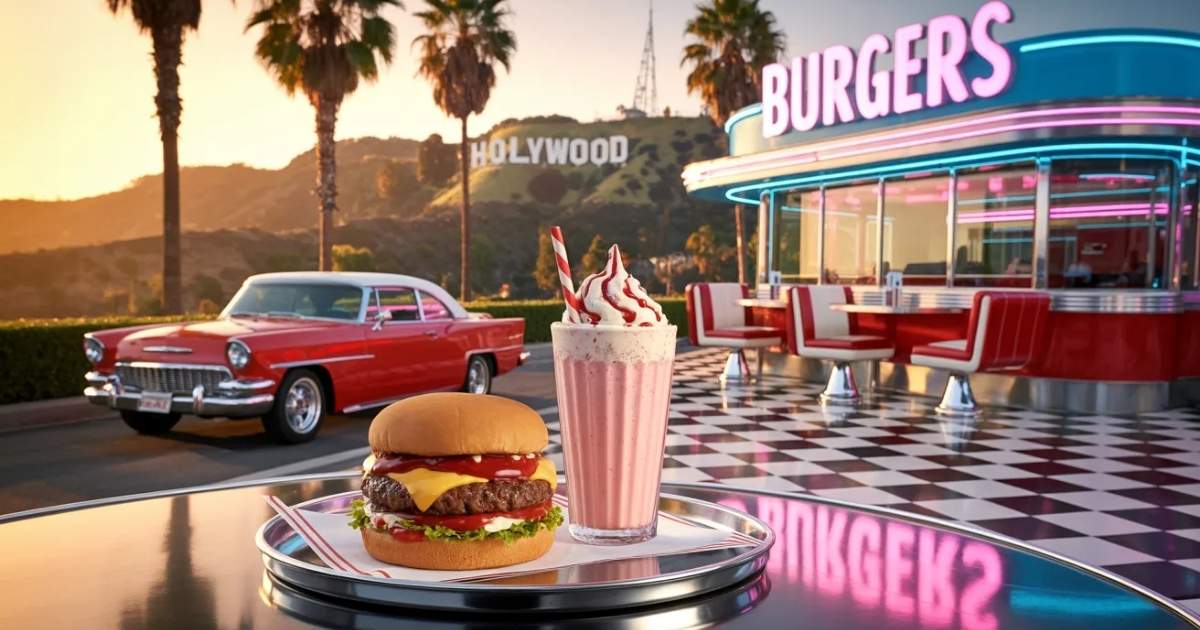
Hollywood fast food isn’t just about grabbing a quick bite. It’s woven into the fabric of entertainment history, influencing everything from blockbuster films to celebrity lifestyles. The LA fast food scene represents something uniquely American a blend of innovation, nostalgia, and cultural significance that transcends simple meals.
When you think about movie culture food, images of greasy burgers, milkshakes, and neon-lit diners probably flood your mind. These aren’t random associations. Film food scenes have immortalized certain eateries, turning ordinary restaurants into cultural landmarks. From Tarantino’s obsessive food references to late-night celebrity sightings, hollywood food culture tells stories beyond the screen.
This comprehensive guide explores fifteen legendary fast food establishments that defined generations. These classic hollywood eateries survived decades of change, economic shifts, and evolving tastes. They represent more than nostalgia they’re living museums of american food culture.
The Birth of Hollywood Fast Food Culture
Fast food culture exploded in Los Angeles during the 1940s and 1950s. Post-war prosperity met automobile culture, creating perfect conditions for drive-ins and quick-service restaurants. The studio district food scene catered to busy actors, directors, and crew members who needed fast, affordable meals between takes.
Hollywood restaurant history reveals fascinating patterns. Early establishments understood their unique clientele creative professionals working irregular hours who craved comfort food and community. These spaces became unofficial networking hubs where deals happened over burgers and fries.
The entertainment dining landscape differed dramatically from other cities. LA’s car-centric culture meant restaurants needed parking lots and drive-through windows. Walking wasn’t practical in sprawling Los Angeles. This geographical reality shaped american dining trends nationwide.
Celebrity food culture emerged organically. Stars needed places to eat without constant interruption. Certain famous diners developed reputations for respecting privacy while serving exceptional food. This unspoken agreement between owners and celebrities created safe havens.
Pink’s Hot Dogs: An 84-Year Institution
Founded in 1939 by Paul and Betty Pink, this iconic hollywood fast food stand started as a pushcart selling ten-cent hot dogs. Today, Pink’s represents fast food in hollywood at its purest unpretentious, delicious, and historically significant.
Located on La Brea Avenue, Pink’s serves over 2,000 customers daily. Their menu features dozens of hot dog variations, many named after celebrities who frequent the establishment. The celebrity fast food connection runs deep here.
Notable facts about Pink’s:
- Bruce Willis has his own hot dog (The Bruce Willis: mustard, relish, onions, tomatoes, sauerkraut, and bacon)
- Orson Welles once ate eighteen hot dogs in one sitting
- Open until 2 AM on weekends, serving the late night fast food crowd
- Featured in countless films and television shows
- Family-owned for three generations
Pink’s exemplifies movie food history perfectly. It’s appeared in “Mulholland Drive,” numerous music videos, and reality shows. Directors use it as shorthand for authentic Los Angeles culture.
The quality remains consistent despite massive popularity. Hand-cut fries, snappy hot dogs with natural casings, and homemade chili sauce keep people returning. This commitment to fundamentals defines legendary fast food operations.
In-N-Out Burger: The West Coast Phenomenon
No discussion of burger joints hollywood makes sense without In-N-Out. Founded in 1948 by Harry and Esther Snyder in Baldwin Park, California, this chain revolutionized fast food culture with radical simplicity.
The menu features burgers, fries, shakes, and drinks. Nothing else. This minimalism allows perfect execution. Fresh beef arrives daily, never frozen. Potatoes get hand-cut on-site. The quality-over-variety approach influenced american food culture profoundly.
In-N-Out’s cultural impact:
| Aspect | Significance |
| Secret Menu | Created underground food culture nationwide |
| Quality Standards | Proved fast food could use premium ingredients |
| Employee Treatment | Pays above industry average, low turnover |
| Regional Loyalty | West Coast identity marker |
| Movie Appearances | Featured in “The Big Lebowski,” countless others |
Celebrity eating habits revolve heavily around In-N-Out. Paris Hilton, Gordon Ramsay, and countless athletes profess their love publicly. The celebrity dining spots reputation grew organically through genuine appreciation.
The secret menu represents pop culture food innovation. “Animal Style,” “Protein Style,” and “3×3” burgers became insider knowledge before social media existed. This grassroots marketing proved more effective than traditional advertising.
In-N-Out locations near studio district food areas stay packed during lunch rushes. Crew members grab dozens of burgers for production teams. This practical utility cemented its film industry lifestyle integration.
Tommy’s Original World Famous Hamburgers
Since 1946, Tommy’s has served chili burgers that define Los Angeles comfort food. Founder Tom Koulax created something uniquely Californian messy, satisfying, and unforgettable. The iconic burger spots conversation cannot exclude Tommy’s contribution.
Located on Beverly Boulevard, the original stand maintains its no-frills aesthetic deliberately. Formica counters, paper plates, and fluorescent lighting create an egalitarian atmosphere. Executives eat beside construction workers.
What makes Tommy’s special:
- Open 24/7, serving the after-hours dining crowd
- Chili recipe unchanged since 1946
- Cash-only policy at original location
- Attracts celebrity food sightings regularly
- Featured in numerous film food scenes
The chili contains mystery. Tommy never revealed his exact recipe, taking secrets to his grave. Subsequent owners maintain the tradition, creating mystique that enhances appeal.
Late night fast food culture in Hollywood centers partly around Tommy’s. After concerts, movie premieres, or club nights, crowds descend seeking chili-smothered satisfaction. This ritual spans generations.
Film crews shooting overnight scenes often cater from Tommy’s. The movie meals connection runs practical affordable, filling, and beloved by crews. This behind-the-scenes influence shaped cinema dining culture subtly.
The Apple Pan: Unchanged Since 1947
The Apple Pan represents vintage diners perfection. Located on Pico Boulevard, this Westside institution refuses modernization deliberately. No changes, no expansion, no compromises.
The U-shaped counter seats twenty-six people maximum. No tables exist. You sit, order from aproned servers who’ve often worked there decades, and watch your burger being prepared in full view. This transparency builds trust.
The Apple Pan’s signature items:
- Hickory Burger: Tangy sauce, lettuce, pickles on toasted bun
- Steakburger: Simple perfection with Tillamook cheddar
- Apple Pie: Served in paper bag, legendary status
- Banana Cream Pie: Equally famous, equally simple
Hollywood eateries rarely achieve this timelessness. Most chase trends, renovate constantly, or franchise aggressively. The Apple Pan’s resistance to change became its defining characteristic.
Celebrity food culture embraces The Apple Pan differently than newer spots. It’s not about being seen it’s about quality. This authenticity attracts genuine food lovers regardless of fame.
The classic hollywood eateries atmosphere feels transported from another era. No phones allowed at the counter. Cash only. Conversation encouraged. These old-school policies create community rather than transactions.
Mel’s Drive-In: American Graffiti Immortalized It
George Lucas’s “American Graffiti” made Mel’s Drive-In synonymous with 1950s nostalgia. Though the film used the original San Francisco location (now closed), the Hollywood outpost carries that legacy proudly.
Located on Sunset Boulevard, Mel’s captures retro burger shops aesthetics perfectly. Chrome fixtures, vinyl booths, checkered floors, and neon signage recreate postwar optimism. It’s movie culture food as theme park.
Why Mel’s matters culturally:
- Open 24 hours, serving midnight food spots seekers
- Jukebox at every booth playing classic hits
- Waitstaff in period-appropriate uniforms
- Menu featuring classic American comfort food
- Tourist destination and local hangout simultaneously
The fast food in movies phenomenon owes much to “American Graffiti.” Lucas captured teenage culture orbiting around drive-in restaurants. That film codified cinema dining culture for generations.
Mel’s balances authenticity with theatricality. Yes, it trades on nostalgia. But the food quality justifies visits beyond Instagram opportunities. Burgers arrive juicy, shakes come thick, and fries stay crispy.
Night eats culture in Hollywood includes mandatory Mel’s visits. After comedy shows, concerts, or late-night filming, people gravitate toward this reliable beacon. The consistency provides comfort in an unpredictable industry.
Canter’s Deli: Where Music Meets Meat
Canter’s Deli opened in 1931, making it older than most famous fast food spots. Located in the Fairfax District, it became legendary for pastrami sandwiches and rock-and-roll connections.
The attached Kibitz Room hosted countless musicians. Guns N’ Roses, Red Hot Chili Peppers, and numerous bands played early shows there. This music-food combination created unique cultural food icons status.
Canter’s cultural significance:
| Element | Impact |
| 24-Hour Service | Late night fast food institution |
| Bakery Section | Fresh breads and pastries daily |
| Music Venue | Launched numerous careers |
| Jewish Deli Tradition | Maintained authentic recipes |
| Celebrity Regular | Countless famous regulars |
The pastrami sandwich towers impossibly high. Hand-cut meat, tangy mustard, fresh rye bread simple components executed flawlessly. This commitment to basics defines legendary burger joints philosophy, applied to deli fare.
Movie food history includes countless Canter’s references. From “Curb Your Enthusiasm” to music documentaries, it appears frequently. Directors use it as cultural shorthand for authentic Los Angeles.
The all-night availability makes Canter’s essential for nightlife food seekers. Musicians finishing late sets, industry people after networking events, and insomniacs all converge here. Democracy reigns at 3 AM.
Fatburger: The Original “Big” Burger
Lovie Yancey founded Fatburger in 1952, creating Los Angeles’s first large-format burger concept. Before supersizing became standard, Fatburger offered substantial portions unapologetically.
Located initially in South Los Angeles, Fatburger represented american fast food innovation from African American entrepreneurship. Yancey built an empire when few opportunities existed for Black women business owners.
What distinguishes Fatburger:
- Build-your-own burger concept decades before Chipotle
- Fresh-never-frozen beef ground daily
- Open kitchen allowing customers to watch preparation
- Music from Fatburger Radio creates atmosphere
- Ice cream shakes made with real Häagen-Dazs
The celebrity eating habits connection runs deep. Queen Latifah, Pharrell Williams, and countless entertainers grew up eating Fatburger. When they achieved fame, they didn’t abandon it for upscale alternatives.
Fast food evolution owes much to Fatburger’s pioneering spirit. The customization model influenced industry trends significantly. Watching your meal being prepared created transparency and trust.
The la cuisine scene welcomed Fatburger’s straightforward approach. No pretension, no gimmicks just quality ingredients cooked properly. This honesty resonated across demographic boundaries.
Original Tommy’s Competitors: The Chili Burger Wars
Tommy’s success spawned imitators throughout Los Angeles. “Tom’s,” “Tommie’s,” and various spelling variations opened, creating hollywood burgers subcategory entirely devoted to chili-covered patties.
This competitive landscape improved quality across the board. Each location claimed superiority, forcing continuous improvement. Consumers benefited from this quick service dining arms race.
The chili burger phenomenon:
- Regional specialty unique to Los Angeles
- Spawned dozens of competitors and variations
- Created late-night dining culture
- Influenced on-screen food depictions
- Represents working-class food traditions
The fast food culture around chili burgers demonstrates Los Angeles’s Mexican-American fusion influence. Chili, traditionally associated with Tex-Mex cuisine, merged with American burger culture creating something distinctly Californian.
Directors filming gritty Los Angeles stories often include chili burger scenes. It signals authenticity, street credibility, and local knowledge. The film storytelling food language uses these shortcuts effectively.
Roscoe’s House of Chicken and Waffles: Sweet Meets Savory
Founded in 1975, Roscoe’s popularized chicken and waffles combination nationally. While not strictly fast food in hollywood, its cultural impact and quick service earn inclusion here.
The unlikely pairing fried chicken atop waffles with syrup confuses first-timers but converts them immediately. This soul food tradition became pop culture food phenomenon through celebrity endorsements.
Roscoe’s celebrity connections:
- Obama ate there during campaign stops
- Snoop Dogg mentions it in songs regularly
- Countless rappers, athletes, and actors visit
- Featured in music videos and films
- Social media sensation before social media existed
The celebrity food sightings happen constantly at Roscoe’s. Unlike exclusive restaurants where celebrities hide, this accessible pricing and casual atmosphere encourages openness. Fans and stars eat side-by-side.
Movie culture food scenes increasingly feature Roscoe’s. It represents authentic Los Angeles culture that mainstream America finds exotic yet approachable. The visual appeal golden waffles, crispy chicken, amber syrup photographs beautifully.
The Rise of Food Trucks: Mobile Hollywood Fast Food
Modern hollywood fast food culture embraced food trucks enthusiastically. Beginning around 2008, gourmet trucks revolutionized street food lifestyle expectations.
Kogi BBQ pioneered the movement, fusing Korean and Mexican cuisines. Roy Choi’s innovations proved trucks could deliver restaurant-quality food affordably. This democratization shifted american dining trends significantly.
Food truck impact on Hollywood:
| Advantage | Cultural Effect |
| Mobility | Follows crowds to events, filming locations |
| Low Overhead | Experimental menus, affordable prices |
| Social Media | Twitter announces locations, creates community |
| Diversity | Represents LA’s multicultural reality |
| Accessibility | Brings quality food to underserved areas |
Studio district food service improved dramatically. Trucks park near production facilities during lunch hours, offering variety previously unavailable. Crew members benefit from options beyond craft services.
The film industry lifestyle adapted quickly. Productions began hiring specific trucks for catering. This flexibility and quality exceeded traditional catering services.
Celebrity dining spots now include favorite trucks. Stars tweet about discoveries, creating instant buzz. This grassroots marketing proves more authentic than traditional celebrity endorsements.
Jack in the Box: The Quirky Innovator
Founded in 1951 in San Diego, Jack in the Box became iconic hollywood fast food through persistent innovation and weird marketing. The chain’s willingness to experiment influenced fast food culture broadly.
Their menu defies categorization tacos, burgers, egg rolls, teriyaki bowls. This eclecticism mirrors Los Angeles’s multicultural reality better than competitors’ narrow focus.
Jack in the Box innovations:
- First major chain with drive-through intercom (1951)
- Introduced breakfast sandwiches before McDonald’s
- Pioneered late-night fast food marketing
- Recovered from 1993 E. coli crisis through transparency
- Embraced social media marketing early
The late night fast food association runs strong. Their “Munchie Meals” specifically target after-midnight crowds with combination platters and outrageous items.
Movie meals featuring Jack in the Box signal specific demographics and time periods. Directors use the brand as cultural shorthand for West Coast youth culture.
The clown mascot’s irreverent advertising campaigns influenced movie food history indirectly. Those commercials’ absurdist humor matched Hollywood’s creative sensibilities perfectly.
Bob’s Big Boy: The Original Double-Decker
Bob’s Big Boy opened in Glendale in 1936, creating the double-decker hamburger format. This architectural innovation influenced burger construction industry-wide.
The Burbank location, with its iconic architecture and carhop service, became famous burger places pilgrimage site. Classic car enthusiasts gather there weekly.
Bob’s Big Boy significance:
- Invented the double-decker burger (disputed but widely credited)
- Architecture represents Googie style perfectly
- Longest continuously operating Bob’s location
- Featured in numerous films and TV shows
- Preserved as cultural landmark
The vintage diners aesthetic remains intact deliberately. Management understands historical value transcends immediate profits. This preservation benefits hollywood restaurant history awareness.
Classic drive-ins like Bob’s shaped american food culture expectations. The carhop experience, though mostly eliminated elsewhere, continues here as living history.
Film location scouts use Bob’s constantly. The cinematic restaurants value comes from instant period authenticity. No set construction necessary just film reality.
Wienerstreet: The Gourmet Hot Dog Revolution
Opening in the 2000s, Wienerstreet represents modern hollywood food culture evolution. Taking traditional hot dogs upscale with exotic toppings and artisanal buns, they bridge fast food culture and gourmet dining.
This gastropub approach influenced urban food trends significantly. Proving “low” foods could receive “high” treatment without pretension opened creative possibilities industry-wide.
Gourmet fast food characteristics:
- Premium ingredients sourced locally
- Creative flavor combinations
- Craft beer pairings
- Upscale atmosphere, affordable prices
- Social media-friendly presentation
The restaurant trends toward premiumization affected traditional quick service dining dramatically. Chains began offering limited-time gourmet options, borrowing this playbook directly.
Celebrity food culture embraced these hybrid concepts enthusiastically. Stars appreciate quality without formality exactly what gourmet casual delivers.
Carl’s Jr.: The Marketing Maverick
Founded in 1941, Carl’s Jr. became notorious for provocative advertising and oversized burgers. Their controversial commercials featuring celebrities and models eating messily generated publicity relentlessly.
The famous fast food spots category includes Carl’s Jr. for cultural impact beyond food quality. They understood movie culture food connections early, leveraging celebrity partnerships aggressively.
Carl’s Jr. marketing evolution:
- Paris Hilton car-washing commercial (2005) caused national controversy
- “Don’t Bother Me, I’m Eating” campaign
- The Six Dollar Burger challenged perceptions
- Angus beef positioning against competitors
- Kate Upton commercials continued provocative tradition
Celebrity eating habits became marketing fodder. Whether authentic or staged, associations with glamorous figures elevated brand perception among target demographics.
The american dining trends toward bigger portions found enthusiastic participant in Carl’s Jr. Monster burgers and stacked sandwiches appealed to quantity-over-quality seekers.
The Future of Hollywood Fast Food
Fast food culture continues evolving. Ghost kitchens, delivery apps, and virtual restaurants reshape hollywood fast food landscapes dramatically. Physical locations matter less when DoorDash delivers anywhere.
Yet legendary burger joints survive by offering experiences apps cannot replicate. Community, atmosphere, and ritual transcend mere sustenance. People still crave connection with cultural food icons.
Emerging trends shaping the future:
- Plant-based options becoming standard
- Sustainability concerns influencing sourcing
- Technology integration (ordering kiosks, apps)
- Delivery-first restaurant concepts
- Health-conscious menu expansions
The film industry lifestyle adapted already. Productions order via apps, specify dietary restrictions digitally, and expect accommodation. This convenience improved working conditions significantly.
Movie food history will likely include our current moment as transitional. The pandemic accelerated changes already underway, forcing adaptation or extinction.
FAQs
What is the most iconic fast food restaurant?
Pink’s Hot Dogs, serving Hollywood since 1939, defines iconic status.
What is Kim Kardashian’s favorite fast food?
In-N-Out Burger; she frequently posts about Animal Style cheeseburgers online.
Where do most celebrities eat in LA?
Celebrities frequent Soho House, Nobu, and surprisingly, In-N-Out Burger.
What’s the best thing to eat at Universal Studios Hollywood?
The Krusty Burger and Duff Beer in Springfield area wins popularity.
Conclusion
Iconic hollywood fast food represents more than restaurants it’s cultural infrastructure. These establishments witnessed history, influenced art, and fed generations. From Pink’s Depression-era beginnings to modern food truck innovations, evolution never stops.
The la fast food scene influenced american food culture disproportionately. What started in Southern California spread nationwide, shaping expectations and possibilities. The classic hollywood eateries that survived earned their legendary status through consistency and adaptation.
Whether craving late night fast food after concerts or seeking celebrity dining spots where stars actually eat, Los Angeles delivers options matching every mood and budget. This diversity reflects the city’s multicultural heritage and creative spirit.
Movie culture food will continue inspiring filmmakers. Directors understand audiences recognize these locations instinctively, carrying decades of associations. The cinematic restaurants serving dual roles as businesses and cultural symbols enrich storytelling possibilities.
Visit these legendary fast food institutions while possible. Preservation isn’t guaranteed despite historical significance. Economic pressures, changing neighborhoods, and generational transitions threaten even beloved landmarks.
The hollywood food culture conversation extends beyond nutrition into identity, memory, and community. These restaurants fed dreams alongside bodies. They deserve recognition, patronage, and preservation.
Next time you’re grabbing quick service dining in Los Angeles, choose places with stories. Support famous diners that supported countless artists, workers, and dreamers. Taste history. Experience culture. Feed your soul.