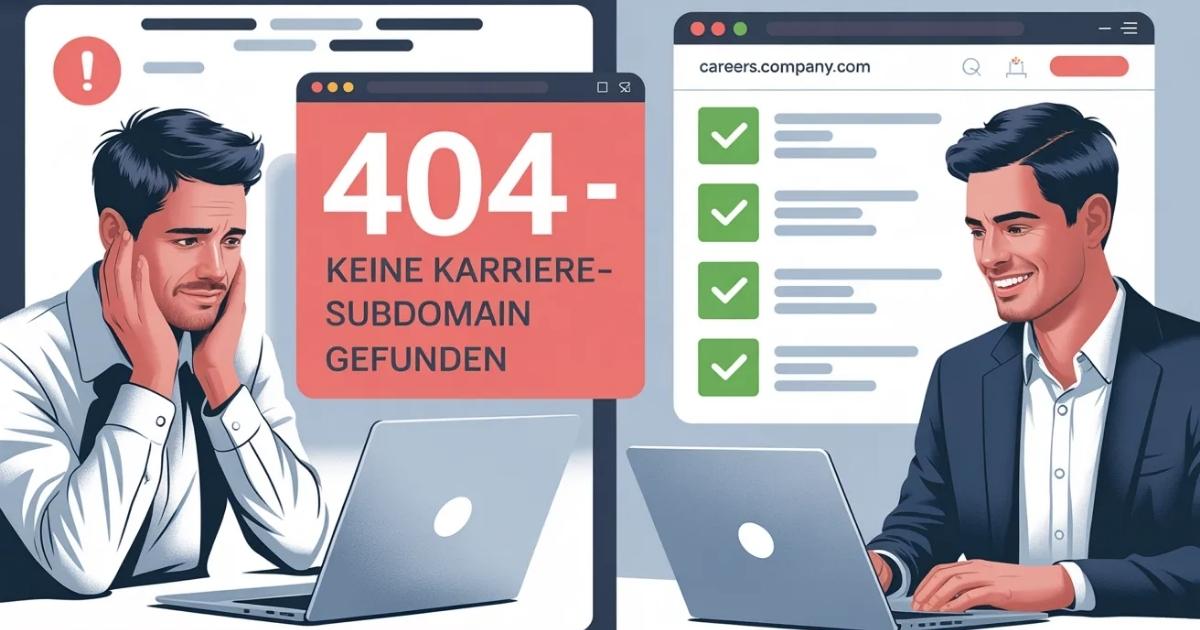
Ever clicked a “Careers” link only to face a dead end? You’re staring at a confusing German error message. It reads “keine karriere-subdomain gefunden.” Frustration sets in immediately. This isn’t just annoying it’s costing companies real talent. Job seekers abandon broken application processes fast. They move straight to your competitors instead.
This career subdomain error affects businesses globally. American companies with European partnerships see it often. Small businesses and enterprise organizations both struggle. The good news? Understanding and fixing this issue isn’t rocket science.
Keine Karriere-Subdomain Gefunden: What Does It Really Mean?
Let’s break down this German phrase completely. “Keine” translates directly to “no” or “none.” The word “karriere” means “career” in English. “Subdomain” stays identical across both languages. Finally, “gefunden” translates to “found.”
Put it all together: no career subdomain found.
But what’s a subdomain anyway? Think of it like an apartment building. Your main domain (company.com) is the building itself. Subdomains are individual apartments within that structure. A karriere subdomain looks like careers.company.com or jobs.company.com.
German companies particularly favor using dedicated career subdomains. It’s part of their structured approach to recruitment. European hiring platforms often integrate better with subdomains. This cultural preference explains why Americans encounter German errors.
When this subdomain error appears, browsers can’t locate the specified address. The DNS records point nowhere. Your carefully crafted recruitment portal becomes invisible to applicants.
Why The Error Keine Karriere-Subdomain Gefunden Matters
First impressions determine everything in talent acquisition today. Dead links destroy credibility in seconds flat. Job seekers don’t wait around for fixes they vanish.
Consider these cold, hard facts:
- 78% of candidates judge companies by recruitment process quality
- Technical errors suggest broader organizational incompetence
- Top talent applies to 5-10 companies simultaneously
- Your 404 error removes you from consideration instantly
Employer branding takes years to build carefully. It crumbles in days when career pages fail. Competitors eagerly scoop up candidates you’re losing. Google penalizes sites with persistent broken links. Revenue suffers from unfilled critical positions.
The downstream effects extend far beyond recruitment. Social media amplifies negative candidate experiences rapidly. LinkedIn discussions highlight technical failures publicly. Trust erosion happens faster than reputation rebuilding ever could.
Common Situations Where Keine Karriere-Subdomain Gefunden Appears
During A Website Migration
Companies redesign their digital presence regularly these days. Website migration projects focus heavily on main site functionality. Career subdomains get forgotten completely in the shuffle. Developers prioritize customer-facing pages over recruitment portals naturally.
Migration checklists rarely include comprehensive subdomain verification steps. Old hosting configurations don’t transfer automatically to new environments. The jobs subdomain that worked perfectly yesterday disappears overnight.
DNS propagation delays compound these migration problems significantly. Some users access pages while others can’t. Geographic inconsistencies create confusion across recruiting teams.
After DNS Changes
IT departments update domain settings for various reasons. Server switches, security improvements, or hosting provider changes trigger updates. The careers subdomain records get deleted accidentally during updates.
DNS settings control where every URL actually points. One wrong click eliminates your entire recruitment infrastructure. Testing all subdomains post-change rarely happens in practice. Cache clearing doesn’t help during propagation periods either.
When Using Third-Party Hiring Tools
Platforms like Greenhouse, Lever, and Workday dominate recruitment technology. Integration requires specific subdomain pointing and configuration. API connections break when DNS records aren’t perfect.
Platform updates sometimes change technical requirements without adequate warning. Vendor support tickets take days to resolve typically. Meanwhile, job applicants see that frustrating German error message.
Incorrect URL Entry
Marketing teams create job posting links across multiple channels. Typos in subdomain names happen more than you’d think. “Karriere” gets misspelled as “career” or vice versa regularly.
Email campaigns distribute broken links to thousands of subscribers. Social media posts perpetuate the mistake across platforms. Nobody clicks test links before publishing campaigns usually. Quality assurance processes skip career page verification consistently.
Technical Causes Behind Keine Karriere-Subdomain Gefunden
The root causes trace back to several technical configurations:
| Technical Issue | Impact Level | Time to Fix |
| Missing A Records | Critical | 2-24 hours |
| Broken CNAME Records | Critical | 2-24 hours |
| Server Misconfiguration | High | 4-48 hours |
| SSL Certificate Gaps | High | 1-6 hours |
| Firewall Blocking | Medium | 1-4 hours |
DNS records form the foundation of subdomain functionality. A Records map subdomains directly to IP addresses. CNAME records point to other domain names instead. When either configuration breaks, the subdomain error appears immediately.
Server configurations must explicitly recognize each subdomain separately. Virtual host settings need specific entries for careers.company.com. Load balancers require routing rules for recruitment traffic. Expired domain registrations affect all associated subdomains catastrophically.
SSL certificates must cover your career subdomain explicitly. Wildcard certificates (*.company.com) solve this problem comprehensively. Without proper coverage, browsers block access entirely. Security warnings prevent even determined candidates from proceeding.
How Job Seekers Experience Keine Karriere-Subdomain Gefunden
Picture this common scenario vividly in detail. Sarah, a talented marketing professional, discovers your company online. The job description matches her skills perfectly and ideally. She clicks the “Apply Now” button excitedly.
Her browser loads indefinitely with just blank whiteness. Then an error message appears in German unexpectedly. Confusion replaces excitement immediately and completely. She tries the back button, frustrated already.
After two more failed attempts, Sarah questions everything. “Can they even manage their own website properly?” The thought lingers uncomfortably. She searches for your company on Google instead.
Competitor job listings dominate the search results now. Sarah applies there within ten minutes total. Your opportunity to recruit her vanished permanently. She posts a screenshot on Twitter later. “This company can’t even fix basic links lol.”
Potential employees share these experiences constantly on platforms. Glassdoor reviews mention broken application processes frequently. Your employment portal failure becomes part of your reputation.
Impact On Companies And Employer Branding
Negative First Impression
Talent seekers evaluate technical competence through website functionality immediately. IT companies look especially incompetent with recruitment errors. “They can’t fix their own site” becomes the persistent narrative.
These impressions stick in candidate memory permanently and deeply. Social proof amplifies through online review platforms exponentially. Professional image suffers across all talent pools simultaneously.
Lost Applications
Every hour of downtime costs actual, real applications. High-demand roles fill quickly at competitor organizations instead. Passive candidates won’t wait for technical fixes typically.
The math becomes brutal quickly:
- 50 daily visitors to broken career pages
- 40% application conversion rate normally
- 20 lost applications daily
- 140 lost applications weekly
Revenue impact from unfilled sales or engineering positions multiplies. Growing companies can’t afford extended recruitment delays ever.
Reduced Online Authority
Search engines detect broken links within days usually. Career page rankings drop in results pages dramatically. “Jobs at [Company]” searches show competitors instead now.
Domain authority scores decrease measurably over time periods. Backlinks to your hiring page become worthless instantly. Organic recruitment traffic plummets by 60-80% typically.
Internal Confusion
HR teams receive complaints about broken links constantly. IT support tickets pile up unnecessarily and rapidly. Recruiters manually send application instructions via email individually.
Departments blame each other for the persistent problem. Emergency meetings disrupt planned work schedules entirely. Productivity drops across multiple teams simultaneously and measurably.
How To Check If You Have A Karriere Subdomain Problem
Testing takes just minutes with systematic approaches:
- Open an incognito browser window completely fresh
- Type karriere.yourcompany.com directly into the address bar
- Try variations: careers.yourcompany.com, jobs.yourcompany.com
- Check from multiple devices (desktop, mobile, tablet)
- Test on different networks (office Wi-Fi, home, mobile data)
Use online DNS lookup tools for deeper verification. MXToolbox and DNSChecker provide instant subdomain status checks. Google Search Console reveals crawl errors automatically.
Screenshot any error messages you encounter for documentation. Ask colleagues in different locations to test independently. Geographic DNS propagation happens unevenly across regions globally.
Step-By-Step Solutions For Keine Karriere-Subdomain Gefunden
Create The Career Subdomain
Access your domain registrar account immediately (GoDaddy, Namecheap, etc.). Navigate to the DNS management section carefully. Click “Add Record” or the similar button there.
Select either A Record or CNAME record type. Enter “karriere” or “careers” as your subdomain name. Point to your web server IP address precisely. Set TTL to 3600 (one hour) initially.
Save changes and wait for global propagation patiently. This process typically takes 24-72 hours worldwide. Don’t panic if changes aren’t instant everywhere.
Connect DNS Records Correctly
A Records point subdomains directly to specific IP addresses. CNAME Records point to other established domain names. Choose based on your particular hosting setup carefully.
Example A Record configuration:
karriere.company.com → 192.168.1.1
Example CNAME configuration:
karriere.company.com → company.com
Verify your existing main domain DNS configuration first thoroughly. Match career subdomain settings to main domain patterns. Avoid creating conflicting A and CNAME records simultaneously.
Link External Career Platforms
Many companies use third-party ATS systems for recruitment. Greenhouse, Lever, and Workday require specific subdomain pointing. Each platform provides detailed DNS instructions in documentation.
Follow their technical requirements exactly as written precisely. Create CNAME records pointing to their designated servers. Test the application flow from start to finish completely.
Enable SSL Certificates
HTTPS isn’t optional for modern career pages anymore. Browsers aggressively block non-secure recruitment portals entirely. SSL certificates must cover all active subdomains comprehensively.
Wildcard SSL certificates (*.company.com) work best universally. Free options like Let’s Encrypt provide wildcard certificates. Paid options from DigiCert or Comodo offer validation.
Install certificates on your web server properly. Update all career page links to HTTPS. Force automatic redirects from HTTP versions consistently.
Test Across Devices
Desktop testing alone proves insufficient in 2026 completely. Over 60% of job seekers use mobile devices. Different browsers render pages differently (Chrome, Safari, Firefox).
Create a comprehensive testing checklist:
- iPhone (Safari and Chrome)
- Android (Chrome and Samsung Internet)
- iPad (both orientations)
- Desktop browsers (latest versions)
- Older browser versions for compatibility
Click every button and link manually yourself. Fill out application forms completely end-to-end. Submit test applications to verify functionality works.
Best Practices To Avoid Keine Karriere-Subdomain Gefunden
Prevention beats emergency fixes every single time. Small businesses and enterprises benefit from these practices:
Documentation and Monitoring:
- Document all subdomain configurations in shared locations
- Maintain DNS change logs with dates and reasons
- Assign specific team members as subdomain owners
- Set up uptime monitoring (UptimeRobot, Pingdom)
Regular Testing and Audits:
- Schedule quarterly DNS audit reviews religiously
- Test all recruitment links before marketing campaigns
- Include career pages in regression testing suites
- Monitor Google Search Console for crawl errors weekly
Infrastructure Best Practices:
- Use staging environments for testing changes first
- Keep backup DNS records documented offline safely
- Train multiple team members on DNS management
- Implement redirect rules for common misspellings
Set calendar reminders for SSL certificate renewals automatically. Create runbooks for emergency subdomain restoration procedures. Establish clear communication protocols for website changes.
SEO Effects Of Keine Karriere-Subdomain Gefunden
Crawling Issues
Googlebot attempts to crawl your karriere subdomain regularly. 404 errors signal poor website maintenance to algorithms. Crawl budget gets wasted on broken recruitment pages.
Search engines reduce crawling frequency for unreliable sites. New job postings don’t get indexed for weeks. Your XML sitemap becomes partially invalid automatically.
Lost Keyword Rankings
Branded searches suffer immediately and dramatically. “Jobs at [Company Name]” drops from top results. Industry-specific keywords like “[Industry] careers [Location]” rankings disappear.
Competitors occupy positions you built over years. Recovery takes 3-6 months after fixing the issue. Long-tail recruitment keywords lose visibility completely meanwhile.
Higher Bounce Rates
Users immediately leave after encountering the error. Bounce rates approach 100% on broken vacancy pages. Google interprets high bounce rates as quality signals.
Algorithm adjustments push rankings downward automatically and quickly. Even main domain rankings may suffer collateral damage. Return visitor rates decrease significantly across your site.
Reduced Trust Signals
Broken links reduce overall domain authority measurably. Backlinks from job boards become toxic liabilities. Social shares lead to dead ends frustratingly.
LinkedIn company page posts show broken previews publicly. Brand searches include “not working” query modifiers. E-A-T signals (Expertise, Authority, Trust) weaken substantially.
Career Subdomain Vs Career Page: What’s The Difference?
Understanding the distinction helps with strategic planning:
| Aspect | Career Subdomain | Career Page |
| URL Structure | careers.company.com | company.com/careers |
| Setup Complexity | Higher | Lower |
| SEO Authority | Separate | Inherited |
| ATS Integration | Easier | Harder |
| Maintenance | More involved | Simpler |
| Best For | Large companies | Small teams |
Career subdomains function as separate digital entities completely. They can use different hosting providers independently. Analytics tracking separates from main site metrics cleanly.
Career pages exist as subfolders within main domains. They inherit domain authority automatically and immediately. Setup requires less technical expertise overall.
Startups and local firms often choose career pages initially. Large enterprises with complex recruitment needs prefer subdomains. Migration between approaches requires careful planning and execution.
Should Small Businesses Worry About Keine Karriere-Subdomain Gefunden?
Company size doesn’t eliminate this subdomain problem magically. Emerging enterprises face identical technical challenges regularly. Limited IT resources actually make problems worse.
Fewer job openings means each recruitment opportunity matters more. Talent competition remains fierce for startups especially. Technical errors damage credibility disproportionately for smaller brands.
Simple solutions exist for limited budgets fortunately:
- Use career pages instead of subdomains initially
- Free ATS platforms handle hosting automatically
- Outsource to freelance developers affordably ($200-500)
- Implement monitoring with free tools (UptimeRobot)
Prevention costs far less than emergency fixes. One-person HR teams can implement these step-by-step solutions. When growth demands subdomain upgrades, plan transitions carefully.
Real-World Example Of Keine Karriere-Subdomain Gefunden
TechVenture Solutions, a mid-size software company, faced disaster. Their US subsidiary underwent a complete website redesign. The old career subdomain (karriere.techventure.com) stopped working completely.
The new site used careers.techventure.com instead mistakenly. Nobody created redirects from old to new addresses. Six full weeks passed before discovery happened.
A frustrated candidate emailed HR directly complaining. By then, 200+ applications were lost permanently. Google rankings dropped from position 3 to position 25.
Emergency response included hiring a DNS consultant immediately. Proper redirects were implemented within 48 intensive hours. A monitoring system prevented future recurrence successfully.
Key lessons learned:
- Test all URLs before migration completion
- Document every subdomain in use currently
- Create redirects for all legacy addresses
- Implement monitoring on day one always
- Assign clear ownership for career infrastructure
Recovery took four full months for ranking restoration. Total costs exceeded $15,000 in lost productivity. Prevention would have cost under $500 total.
Who Is Responsible For Fixing This Issue?
Organizational responsibility varies across different company structures significantly:
IT Department: Handles DNS configuration and server management Web Development Team: Manages website integration and code HR/Talent Acquisition: Owns career page content and strategy Marketing: Maintains links in campaigns and social media Executive Leadership: Ensures accountability and resources allocation
Collaboration between departments proves absolutely essential always. Create cross-functional task forces for complex resolution. Assign primary ownership based on root cause determination.
Document responsibility using RACI charts (Responsible, Accountable, Consulted, Informed). Prevent future finger-pointing with clear ownership matrices. External vendors may own hosted recruitment solutions entirely.
Future-Proofing Your Career Pages
Technology evolves constantly in the recruitment technology space. Plan for subdomain flexibility and future scalability now:
Infrastructure Recommendations:
- Use infrastructure-as-code for DNS management (Terraform)
- Implement automated testing in CI/CD pipelines
- Cloud hosting provides better reliability (AWS, Google Cloud)
- CDN services improve global accessibility (Cloudflare)
Technical Stack for 2026:
- Headless CMS separates content from infrastructure cleanly
- API-first approaches enable seamless platform integrations
- Mobile-first design remains absolutely critical always
- Accessibility compliance meets WCAG standards completely
Schedule quarterly review sessions for technical infrastructure. Allocate budgets for ongoing maintenance and improvements. Create disaster recovery plans for rapid restoration capabilities.
FAQs
Is keine karriere-subdomain gefunden a server error?
No, it’s a DNS configuration or subdomain setup issue.
Can this error fix itself?
No, manual intervention and DNS corrections are always required.
Does it affect only German websites?
No, any website using karriere subdomains can experience it.
Is it dangerous?
No, it’s not dangerous just blocks candidate access completely.
Final Thoughts On Keine Karriere-Subdomain Gefunden
This subdomain error seems small but creates massive impact. Job seekers deserve seamless, functional application experiences consistently. Your employer branding depends on technical reliability fundamentally.
Competitive talent markets leave zero room for errors. Prevention costs dramatically less than emergency fixes. Regular monitoring prevents future occurrences before they start.
Take action immediately if you’re experiencing this issue. Audit your career pages today using the checklist provided. Document everything for team knowledge transfer purposes.
Share this article with IT teams and stakeholders. Comment below with questions or experiences encountered. Your recruitment success depends on functional infrastructure completely.