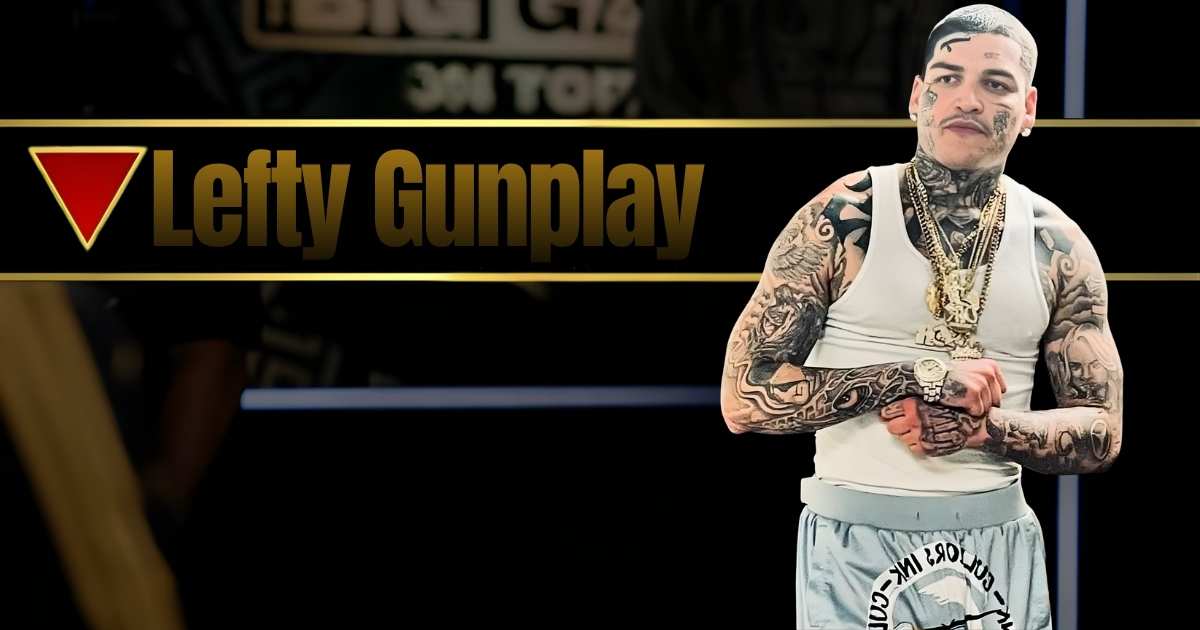
The San Gabriel Valley rapper scene rarely produces artists this raw. Lefty Gunplay isn’t your typical hip hop interview subject. His story weaves through Baldwin Park streets, prison yards, and finally into the spotlight of LA’s underground rap renaissance.
Who Is Lefty Gunplay? The Baldwin Park Rapper Breaking Barriers
Lefty Gunplay emerged from Baldwin Park with a narrative that couldn’t be scripted. This Latino rapper Los Angeles communities have embraced represents something beyond music he’s living proof that life after prison doesn’t mean life’s over.
Diego Tapia, the man behind the moniker, spent years navigating California’s correctional system. Unlike manufactured street narratives plaguing modern rap, his authenticity bleeds through every bar. The Baldwin Park artist doesn’t glorify his past. He simply refuses to hide it.
His journey from incarceration to the OTR Records signing happened faster than most redemption arcs. But speed doesn’t diminish substance. This West Coast rapper earned every opportunity through relentless dedication to his craft.
Lefty Gunplay Age
Lefty Gunplay is believed to be in his early-to-mid 30s, though he keeps exact details private. The Baldwin Park rapper spent crucial years incarcerated, which delayed his entry into the Los Angeles rap scene.
His age actually works as an advantage bringing maturity and authenticity younger artists can’t match. The Latino rapper Los Angeles communities respect carries weight precisely because he’s lived the experiences he raps about.
The Lefty Gunplay Conversation: Inside Our Exclusive Interview
Our Passion of the Weiss interview with Lefty revealed layers most fans never see. The rapper interview took place in a studio where he’d been grinding for 16 hours straight. Exhaustion couldn’t dim his intensity.
Early Life and the Path to Music
“Baldwin Park raised me rough,” he explained without hesitation. The LA County rapper grew up watching opportunities evaporate around him. Friends disappeared into gangs. Family struggled with poverty’s daily grind.
Music became his escape before becoming his salvation. Latino hip hop gave him vocabulary for experiences mainstream America ignores. He studied legends both Chicano rap pioneers and broader West Coast icons.
Prison Experience and Transformation
The prison to rap career transition isn’t smooth for anyone. Lefty spent crucial years behind bars, time he describes as “the university I never wanted to attend.” His incarceration story includes writing hundreds of verses on commissary paper.
Life after prison presented unexpected challenges. Society doesn’t roll out welcome mats for formerly incarcerated individuals. The reentry challenges included:
- Finding legitimate employment with a record
- Rebuilding family relationships damaged by absence
- Resisting old influences from the streets
- Maintaining focus on long-term goals
- Navigating probation restrictions while pursuing music
“Freedom after jail feels like wearing shoes two sizes too small,” he told us. “Everything rubs wrong at first. You adjust or you go back.”
His second chance life required complete mental rewiring. The Los Angeles rap scene doesn’t wait for anyone to get comfortable. He had to deliver immediately.
Rookie Of The Year: The Project That Changed Everything
His debut project dropped with minimal fanfare but maximum impact. Rookie of the Year album wasn’t just clever branding it was prophetic.
The Lefty Gunplay project showcased technical skill honed in isolation. Bars written in cells now reached thousands of ears. Critics within the LA underground rap community recognized something special immediately.
Musical Style and Production Choices
His sound bridges old West Coast underground traditions with contemporary edge. Production leans grimy, letting his voice cut through without polish diluting the message. The indie rap scene appreciated this unvarnished approach.
Key tracks from Rookie of the Year:
| Track Title | Theme | Impact |
| “County Blues” | Prison life | Established authenticity |
| “Baldwin Park Nights” | Hometown struggles | Local anthem status |
| “Second Wind” | Redemption | Radio play on underground stations |
| “OTR Anthem” | Label celebration | Industry attention |
Each song revealed different dimensions. The new rap release proved he wasn’t one-dimensional despite the street narrative dominating his biography.
The Independent Record Deal That Launched His Career
OTR Records saw potential where major labels saw risk. The OTR label specializes in discovering Southern California rapper talent overlooked by industry gatekeepers.
His independent label agreement preserved creative control while providing resources. The first deal came with modest advances but substantial support. OTR Records deal structure allowed him to maintain ownership of masters critical for long-term wealth building.
“Most music contract offers I received wanted my soul,” he laughed. “OTR wanted partnership, not ownership.”
The indie label signing aligned with broader trends. Savvy artists increasingly choose independence over major label advances. His record signing exemplified this shift toward artist empowerment.
LA’s Underground Renaissance: Where Lefty Fits
The West Coast renaissance is real, not media hype. California rap movement energy resembles the golden era’s creative explosion. Modern West Coast rap sounds hungry again.
Lefty Gunplay represents this LA rap resurgence perfectly. The local LA rap scene needed authentic voices after years of manufactured personas. The Los Angeles underground historically rewards genuine street narratives delivered with skill.
The San Gabriel Valley’s Growing Influence
SGV rapper culture differs from South Central or Compton’s documented scenes. The San Gabriel Valley hip hop landscape remained underground longer. Mexican American rapper artists from this region bring distinct perspectives shaped by immigrant family experiences.
Baldwin Park specifically produces artists with chip-on-shoulder determination. The Baldwin Park hip hop community supports its own fiercely. Lefty benefits from this grassroots backing while expanding beyond geographic limitations.
Life After Prison: The Daily Reality
Post incarceration life involves more than dropping albums. Adjusting after release means rebuilding everything from scratch. Housing, employment, relationships all require patient reconstruction.
“People think signing a record label deal solves everything,” Lefty explained. “I still report to my PO. Still deal with housing applications rejecting me. Still see doors close when backgrounds get checked.”
His transparency about these struggles resonates with communities facing similar barriers. The hip hop interview circuit rarely addresses these unglamorous realities. Lefty refuses to pretend success erased his past.
Advice for Others in Similar Situations
When asked about guidance for those leaving the system, his response was immediate:
“Find your thing and attack it relentlessly. Mine was music. Yours might be welding or coding or cooking. Don’t matter what it is just commit fully.”
He emphasized redemption arc narratives require concrete action, not just good intentions. Dreams don’t pay probation fees or support families.
The Diego Tapia Interview: Beyond the Music
Our Diego Tapia interview explored dimensions beyond beats and bars. Family dynamics, mental health struggles, the weight of representing formerly incarcerated people all surfaced during our conversation.
His relationship with his mother provides emotional anchoring. She attended every court date, accepted collect calls despite financial burden, and never stopped believing in eventual transformation. “She saw the rapper before I did,” he admitted.
Community Impact and Responsibility
Success brings platform and responsibility. Lefty takes the latter seriously. He speaks at youth programs, sharing cautionary tales without preaching. LA street rapper credibility lets him reach kids who tune out traditional authority figures.
The city of Angels rap scene watches how he navigates newfound visibility. Will success corrupt or elevate? Early indicators suggest the latter.
Looking Forward: What’s Next for Lefty Gunplay
Future plans include expanding beyond music into youth mentorship programs. The California rap scene needs more success stories demonstrating alternative paths.
New music is constantly in development. His work ethic forged in scarcity drives relentless output. Multiple projects are scheduled for release throughout the year.
Collaborations with other Latino hip hop artists across California are planned. Unity within Hispanic rapper communities could shift industry power dynamics significantly.
Key Takeaways From Our Lefty Gunplay Interview
This rapper conversation revealed an artist fully aware of his position and responsibilities. The West Coast rapper landscape is richer for his presence.
Essential insights from our discussion:
- Authenticity can’t be manufactured or faked long-term
- Second chances require relentless work ethic and focus
- Community support provides foundation for individual success
- Independence allows creative freedom major labels rarely permit
- Past mistakes don’t determine future potential
The LA based label OTR Records bet correctly on his talent. The LA music scene gained an important voice. Fans discovered an artist unafraid of vulnerability while maintaining street credibility.
Conclusion: The Real Impact of Lefty Gunplay’s Story
An interview with Lefty Gunplay offers more than entertainment. His narrative challenges assumptions about who deserves opportunities and what redemption actually requires. The Southern California hip hop scene is better for his contributions.
From Baldwin Park streets to studio sessions, from county jail to indie rap label success his journey inspires because it’s real. No shortcuts existed. No silver spoons appeared. Just grinding, failing, learning, and persisting until breakthrough arrived.
The Los Angeles rap scene watches his trajectory closely. Will he sustain momentum or become another cautionary tale? Based on our conversation, bet on the former. This Latino rapper LA communities embrace isn’t going anywhere.
His music streams on all platforms. His story continues unfolding in real time. And the Lefty Gunplay conversation is just beginning.
Poker Player Alan Keating Net Worth And TV Cash Game Results